Solar panel maintenance & repairs in Teesside
Solar panels need little upkeep, but Teesside systems benefit from a periodic clean (coastal salt and traffic film cut output), a health check every few years, and fast attention to inverter faults, the most common failure point. Trusted local engineers cover cleaning, repairs, pigeon proofing and full system audits.
The maintenance a Teesside system actually needs
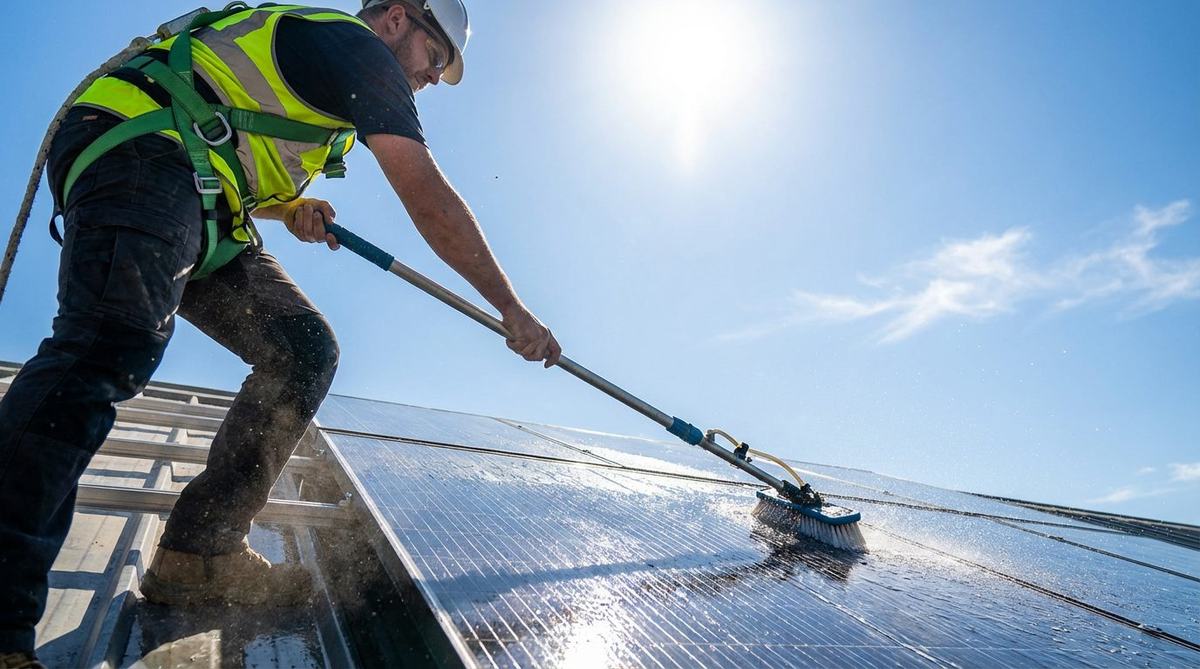
Solar panels are genuinely low-maintenance, no moving parts, rain does most of the cleaning, but "low" isn't "none". On Teesside, two local factors make periodic attention worthwhile: coastal salt film on systems near Redcar and the seafront, and industrial and traffic film across the urban conurbation. Both build a haze that quietly shaves output. A professional clean every couple of years typically pays for itself in recovered generation.
Inverter faults, the number one repair
If your system stops generating or throws error codes, the inverter is the culprit nine times out of ten. It's the hardest-working component and the first to wear, expect one replacement in a system's life, around years 10–15. Symptoms: generation drops to zero, the monitoring app shows faults, or the unit hums, clicks or runs hot. A qualified engineer can usually diagnose from the error code and replace like-for-like in a single visit. Keep the warranty paperwork, many inverters carry 10-year cover.
Pigeons: a bigger problem than you'd think
Teesside's feral pigeon population has worked out that the gap under rooftop panels is dry, warm and safe. Nesting birds foul the panels, dislodge wiring and, in the worst cases, chew through cables. The fix is a mesh guard fitted around the array perimeter: a one-off job, usually a few hundred pounds, and vastly cheaper than rewiring. If you can hear scratching on the bedroom ceiling in the morning, don't wait.
System health checks and electrical testing
A periodic health audit covers what you can't see from the ground: DC cabling condition, isolator and connection integrity, inverter performance against spec, mounting security after winter storms, and whether actual generation matches the original estimate. Worth doing every 3–5 years, when buying a house with an existing system, or whenever output seems to have drifted down. Engineers also handle warranty claims with manufacturers on your behalf, useful when the original installer has since disappeared, which happens plenty in this industry.
When to repair and when to upgrade
A failed inverter on an otherwise sound 10-year-old system is worth repairing. A failed inverter on a 15-year-old system with tired panels is the moment to price a modern replacement, output per panel has roughly doubled in that time, and the new array will often pay for the swap through generation alone. Quotes through this service cover both routes: local engineers for replacement installs, battery retrofits and repairs alike.
Areas We Cover