Solar battery storage in Teesside
A home battery lets you use your own solar power in the evening instead of buying from the grid, typically £2,500–£5,000 retrofitted to an existing Teesside system, or bundled with a new install. Most households raise self-consumption from ~50% to 70–85%, and off-peak grid charging (Economy 7-style tariffs) can stack further savings on top.
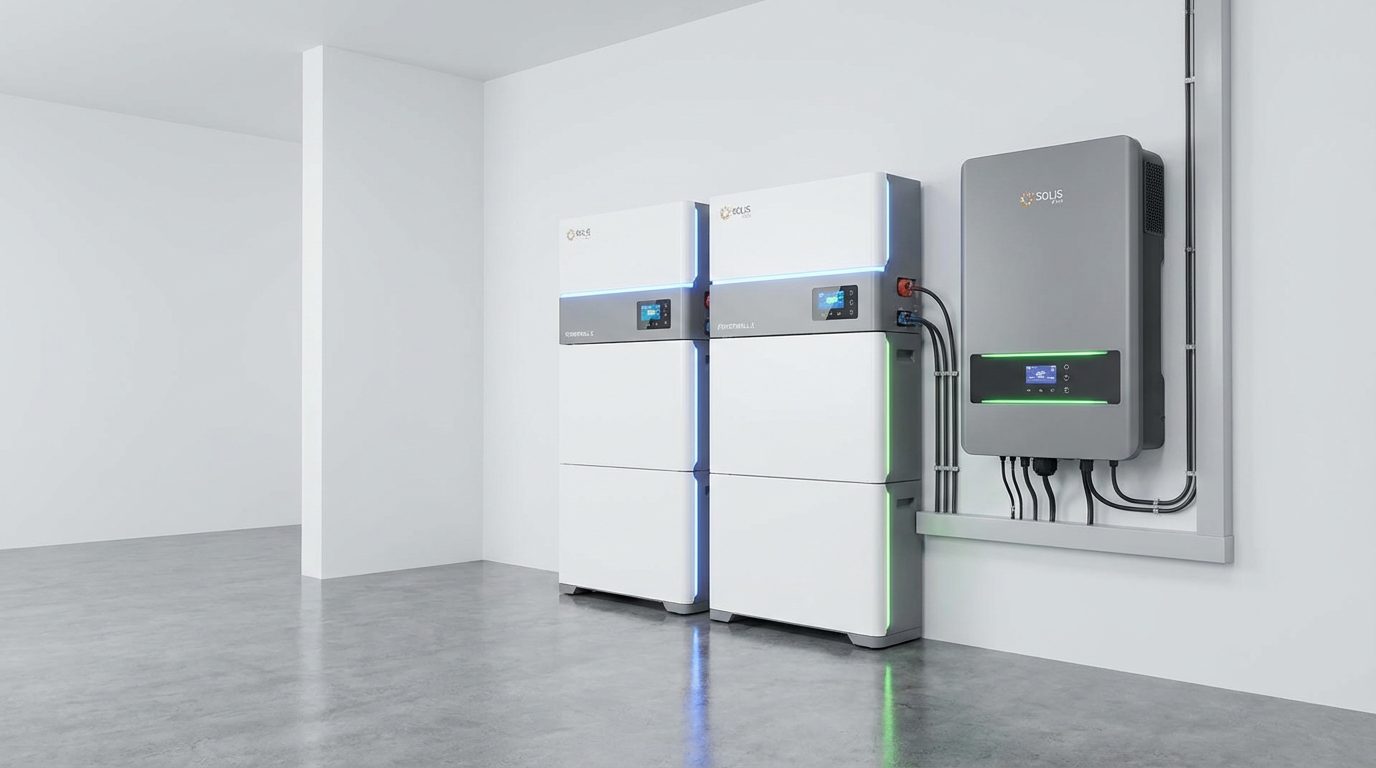
Why a battery changes the solar maths
Without storage, a typical Teesside household uses only around half the solar power it generates, the family is out when the sun is up, and the evening peak lands when the panels have stopped. The surplus goes to the grid for a modest SEG payment. A battery flips that: the day's generation is stored and discharged through the evening, lifting self-consumption to 70–85%. You're avoiding buying electricity at full price rather than selling it cheap, worth roughly three times as much per unit.
What does battery storage cost in Teesside?
Expect £2,500–£5,000 for a 5kWh unit retrofitted to an existing system, installed. Larger 10kWh systems for bigger detached homes (common around Wynyard and Yarm) run £4,000–£7,000. Bundled with a new solar install, the incremental cost is lower because the scaffolding and electrician are already on site. Payback on a battery alone typically runs 6–10 years, shorter for households on time-of-use tariffs who charge cheap overnight as well.
The off-peak charging trick
Modern batteries aren't solar-only. On a time-of-use tariff (Octopus Agile, Economy 7 and similar), the battery can charge from the grid at cheap overnight rates, sometimes a third of the day rate, and discharge through the expensive evening hours. In the North East's darker winter months, when solar generation dips, this tariff arbitrage keeps the battery earning all year round.
Backup power, the underrated benefit
Many systems offer EPS (emergency power supply) capability: keep the fridge, router, lights and boiler controls running during a power cut. Not every battery includes it as standard, some need an additional EPS circuit wiring in, so if blackout protection matters to you, say so when you request quotes and installers will spec it properly.
Retrofit or bundle?
Already have panels? A retrofit is straightforward on most systems installed in the last decade, an installer checks your inverter compatibility (hybrid inverters accept a battery directly; older string inverters use an AC-coupled unit instead). Planning a new system? Bundle them, one scaffold, one visit, one warranty conversation. Either way, the battery is sized to your actual usage, not the biggest unit on the shelf. New to solar entirely? Start with solar panel installation.
Areas We Cover